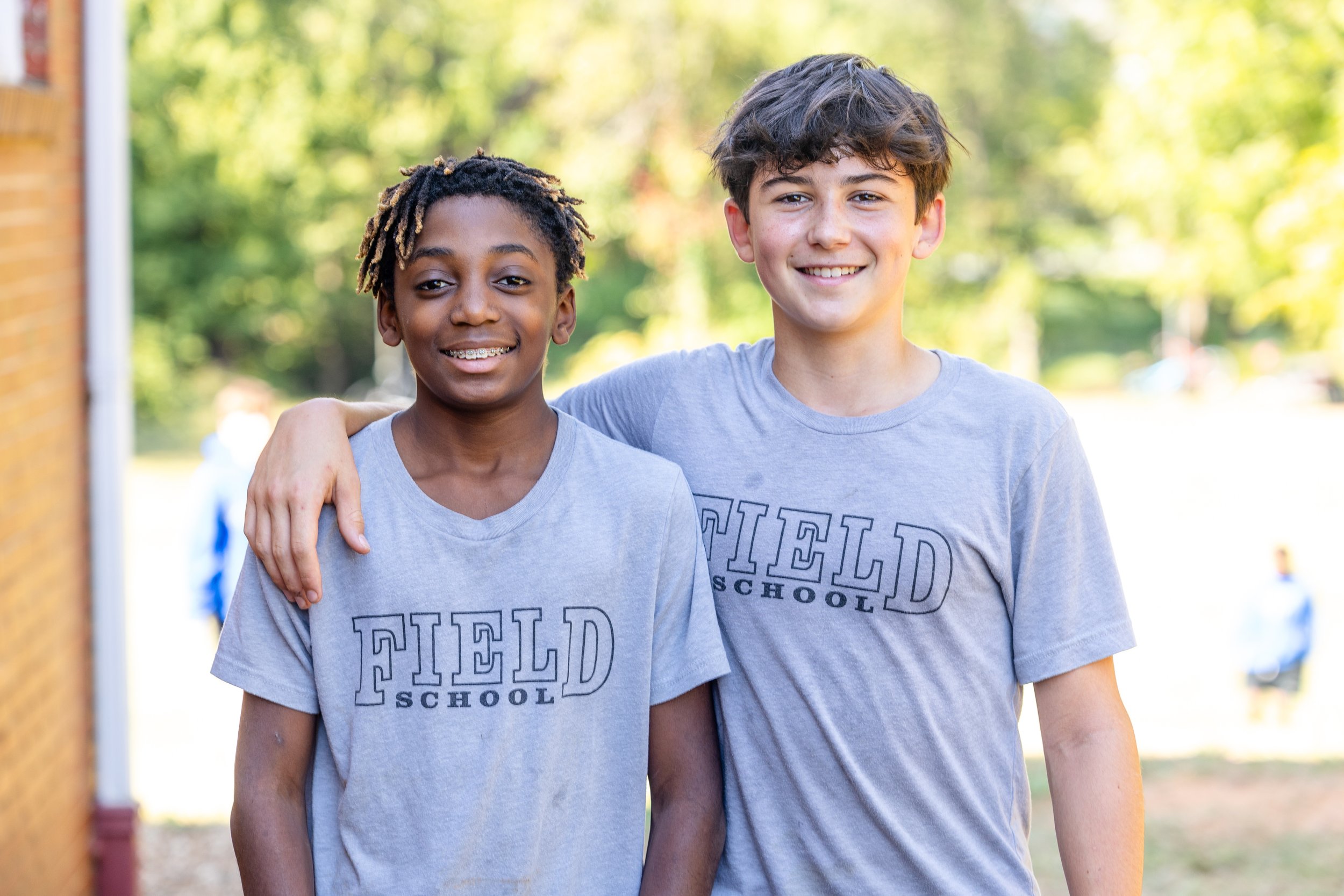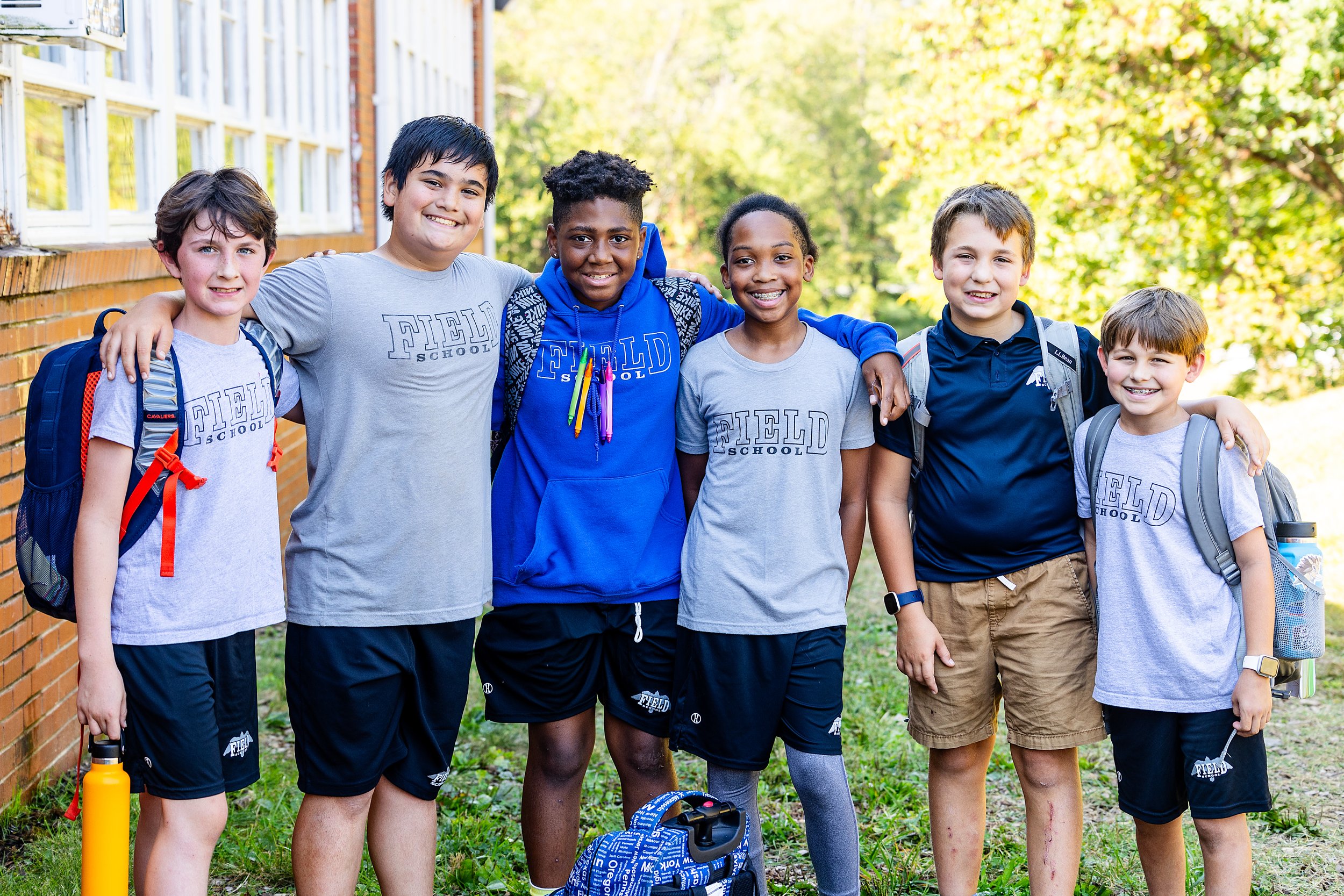
Every boy known, every boy a brother

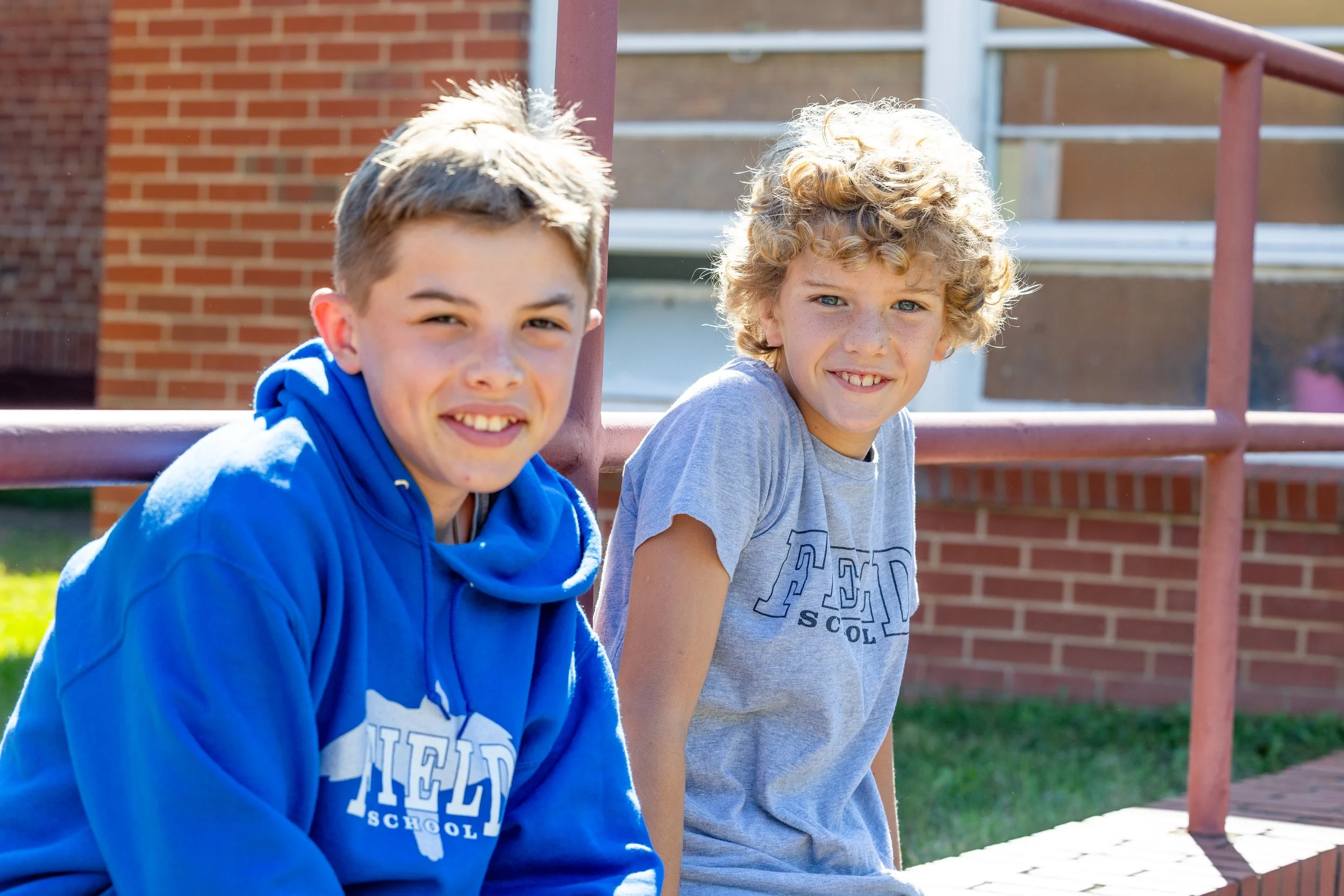
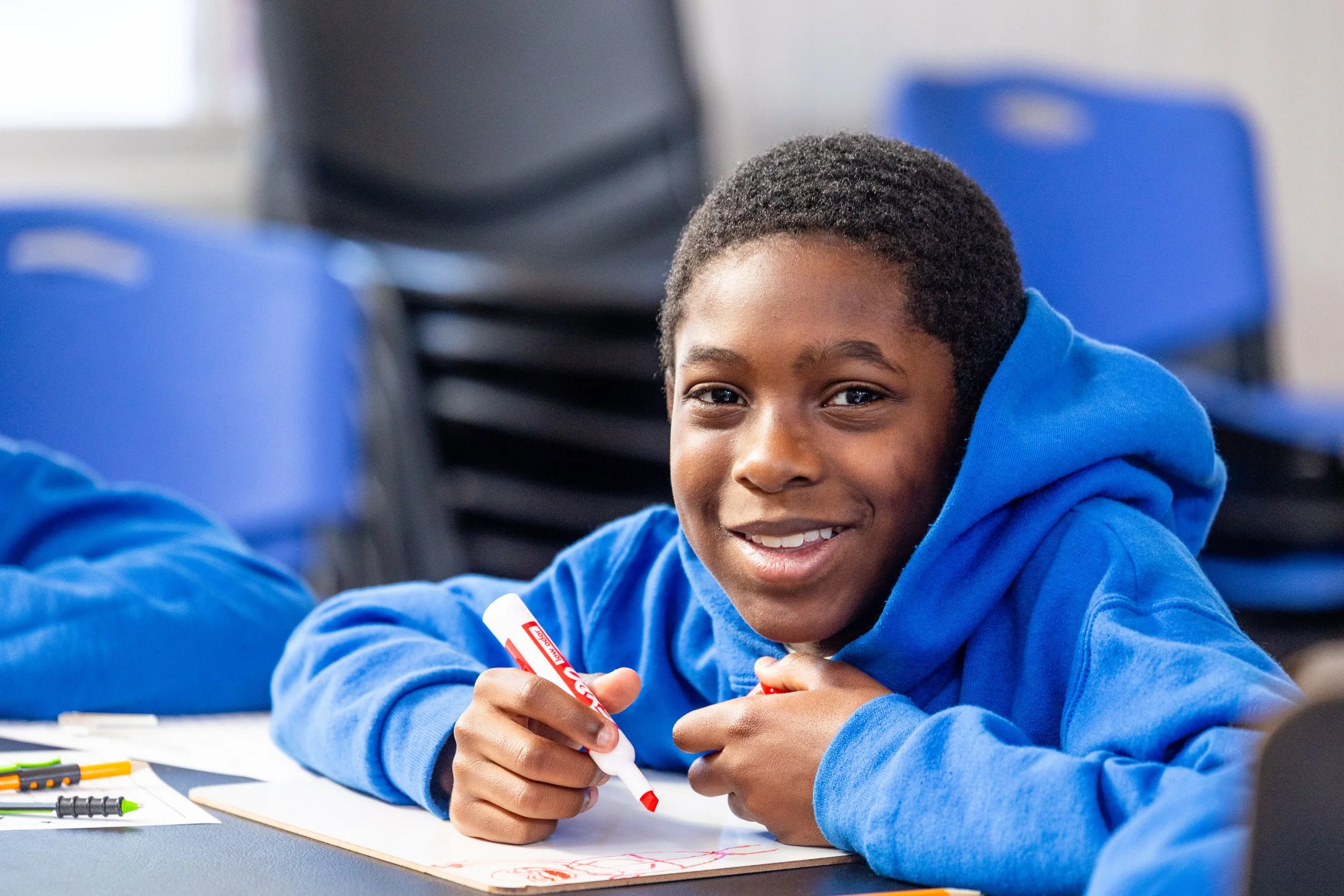
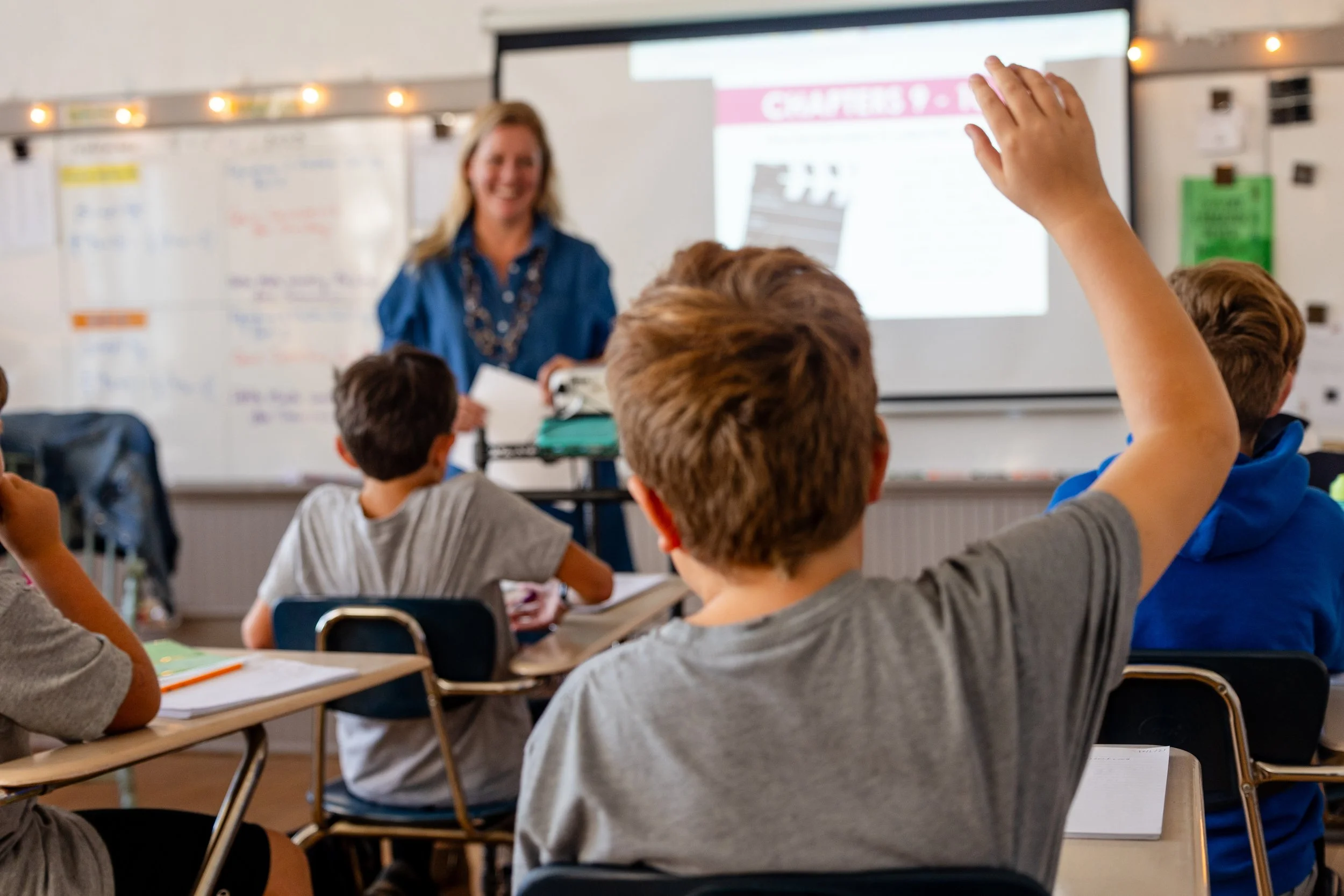
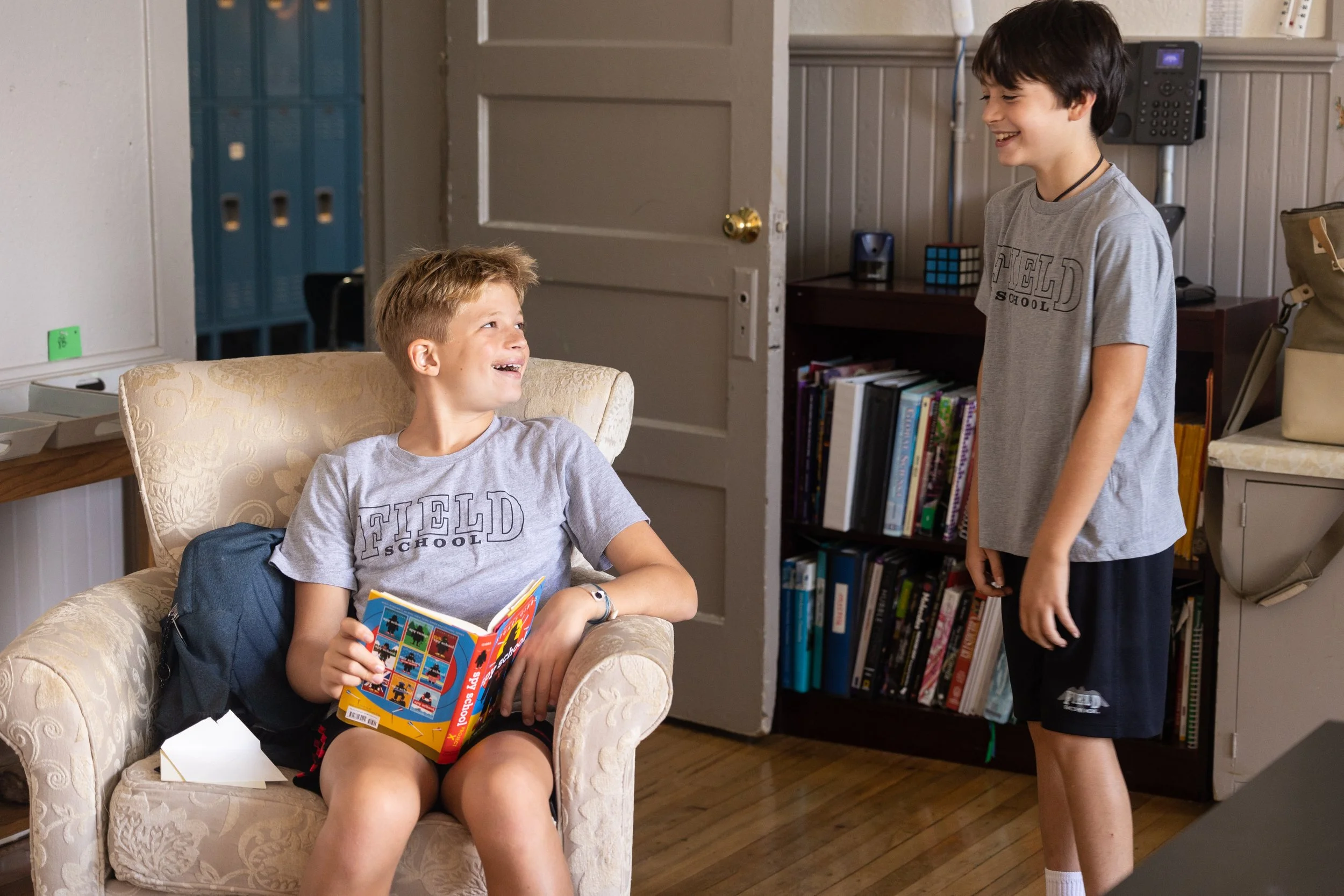
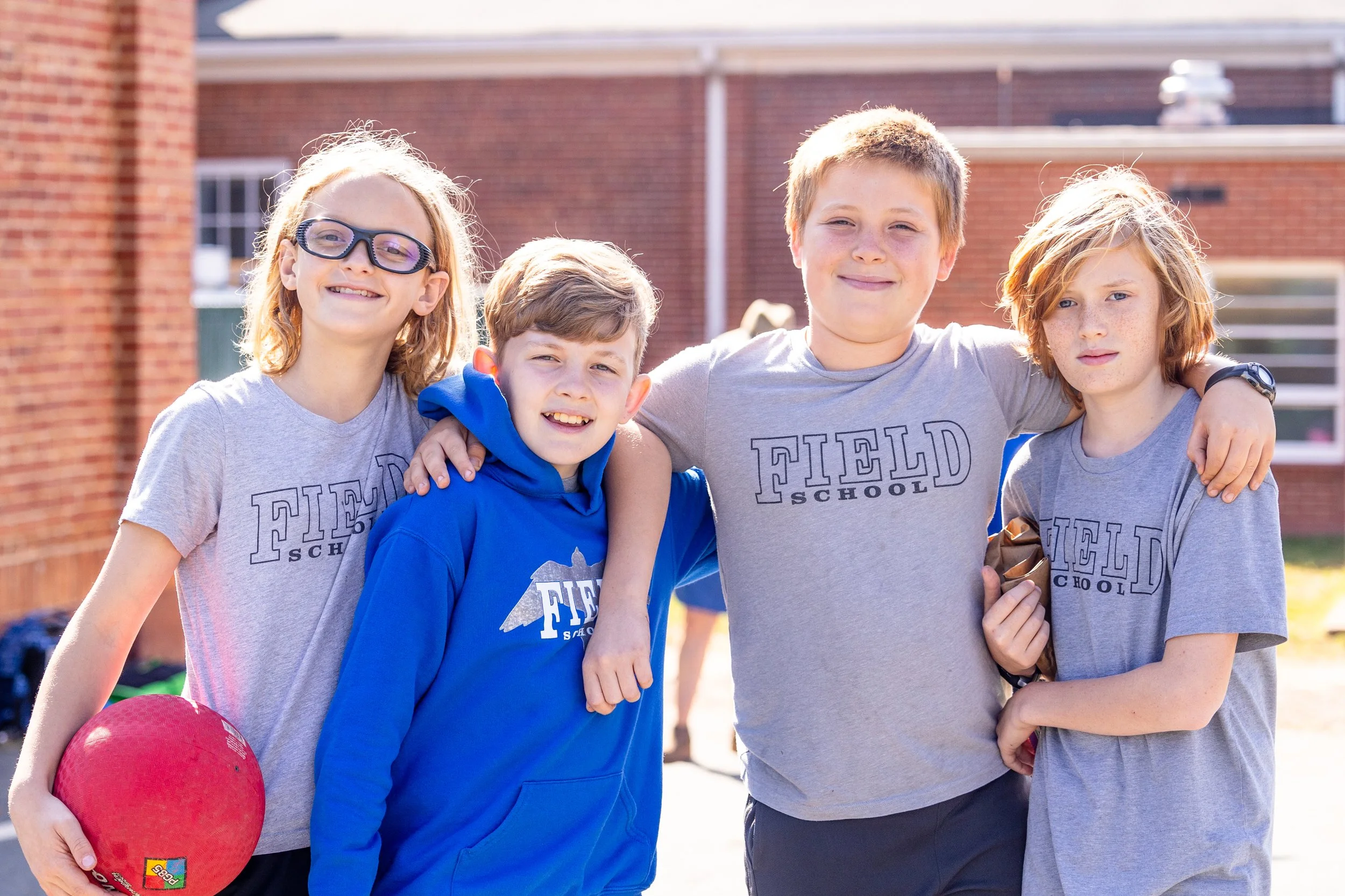
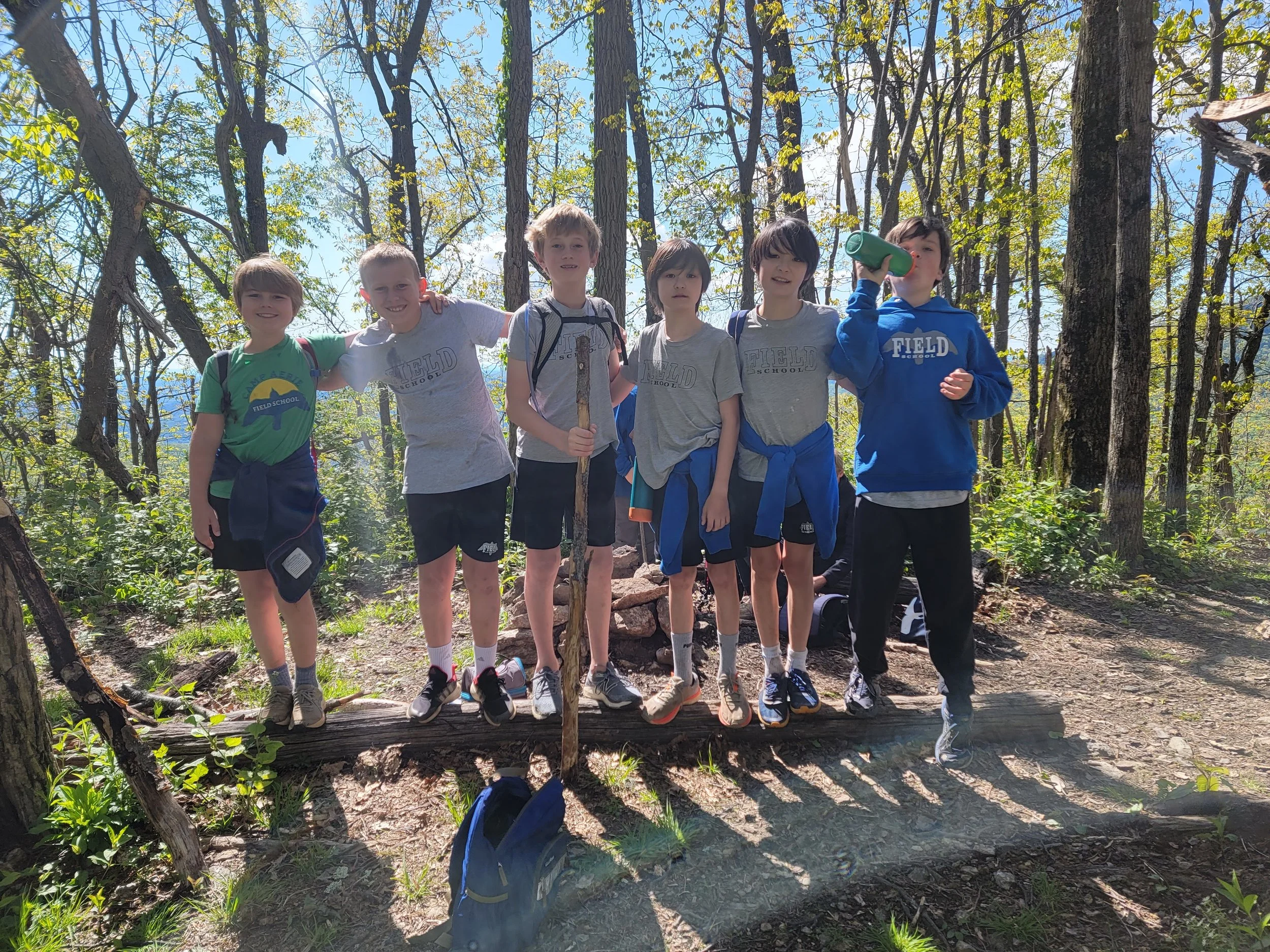
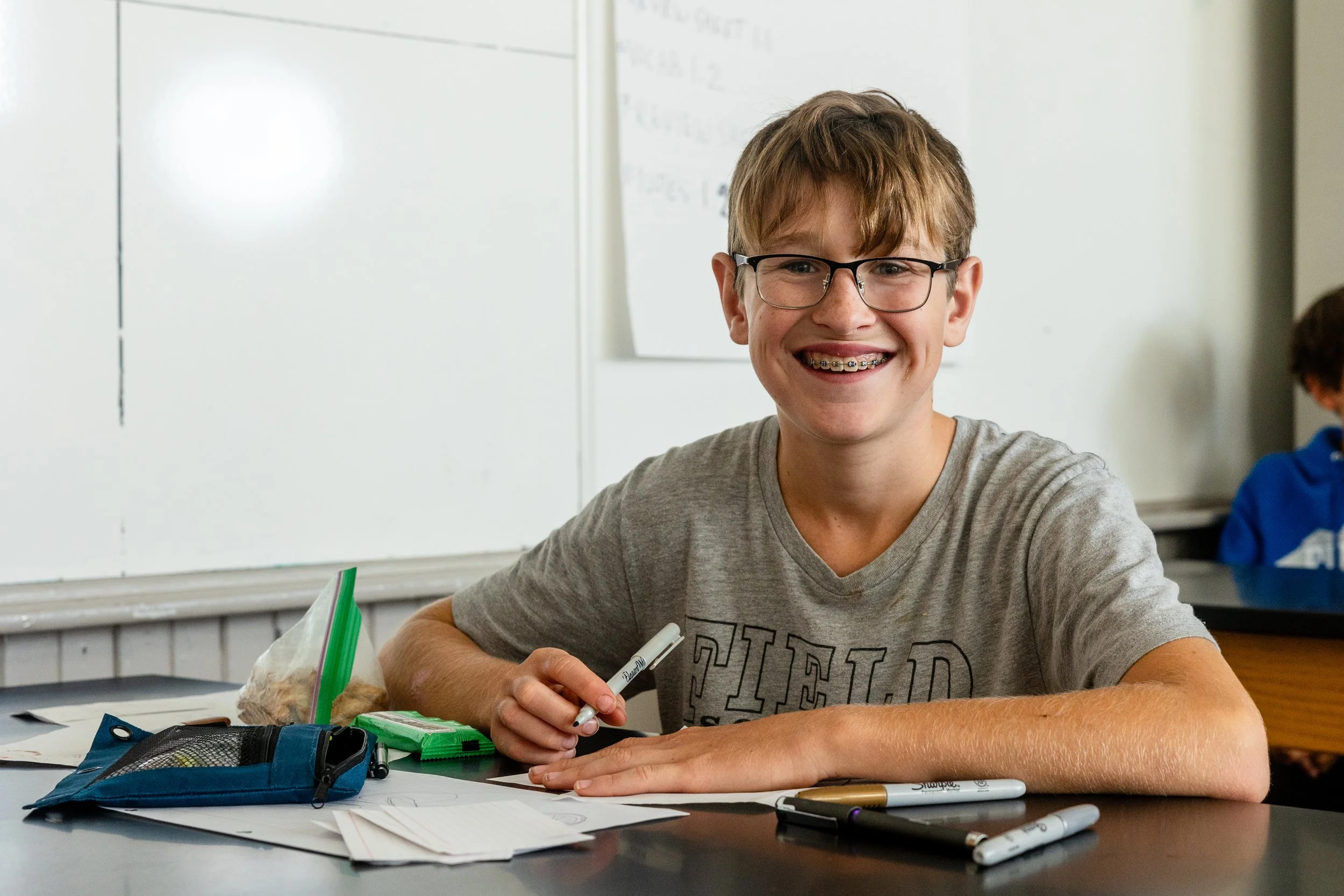
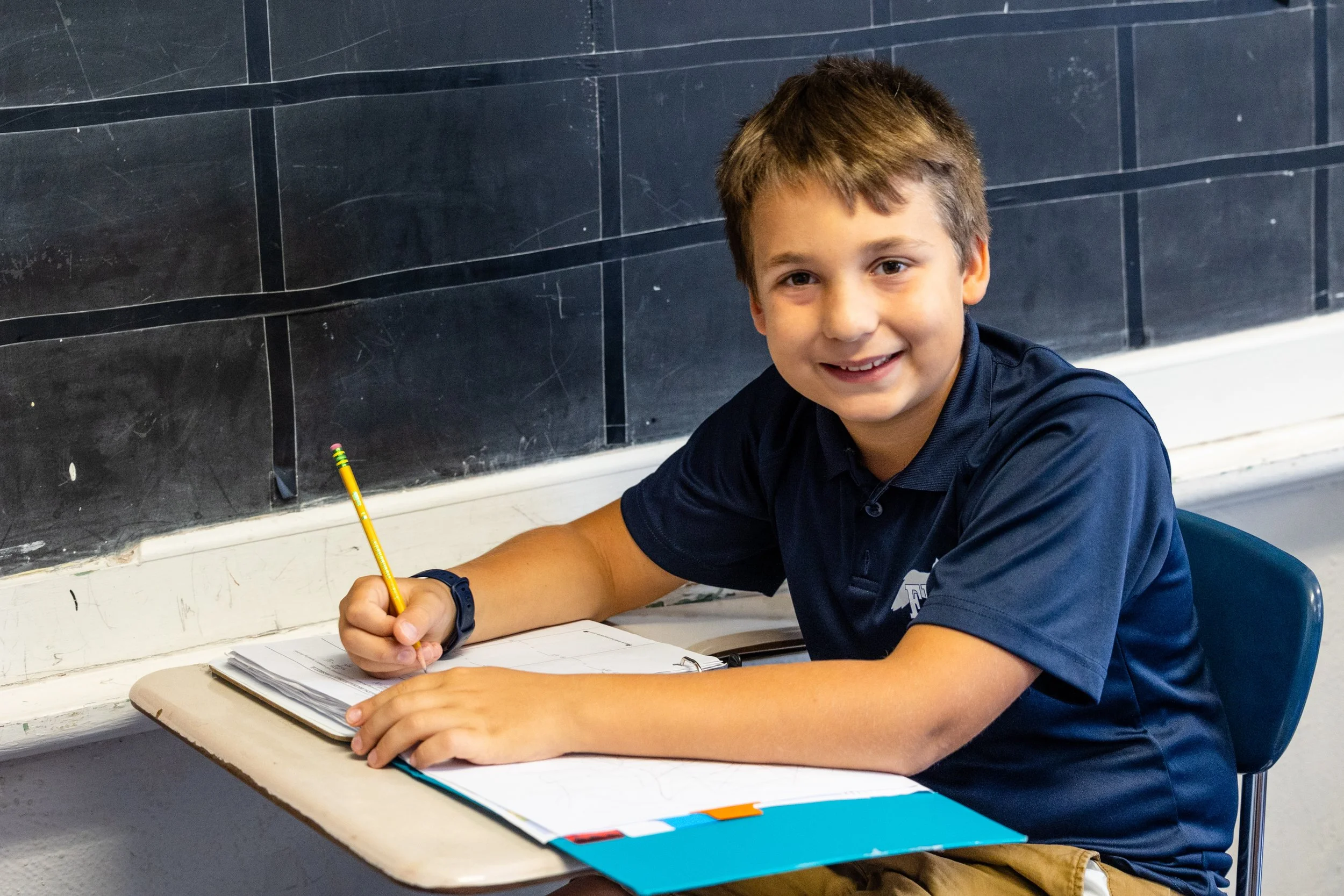
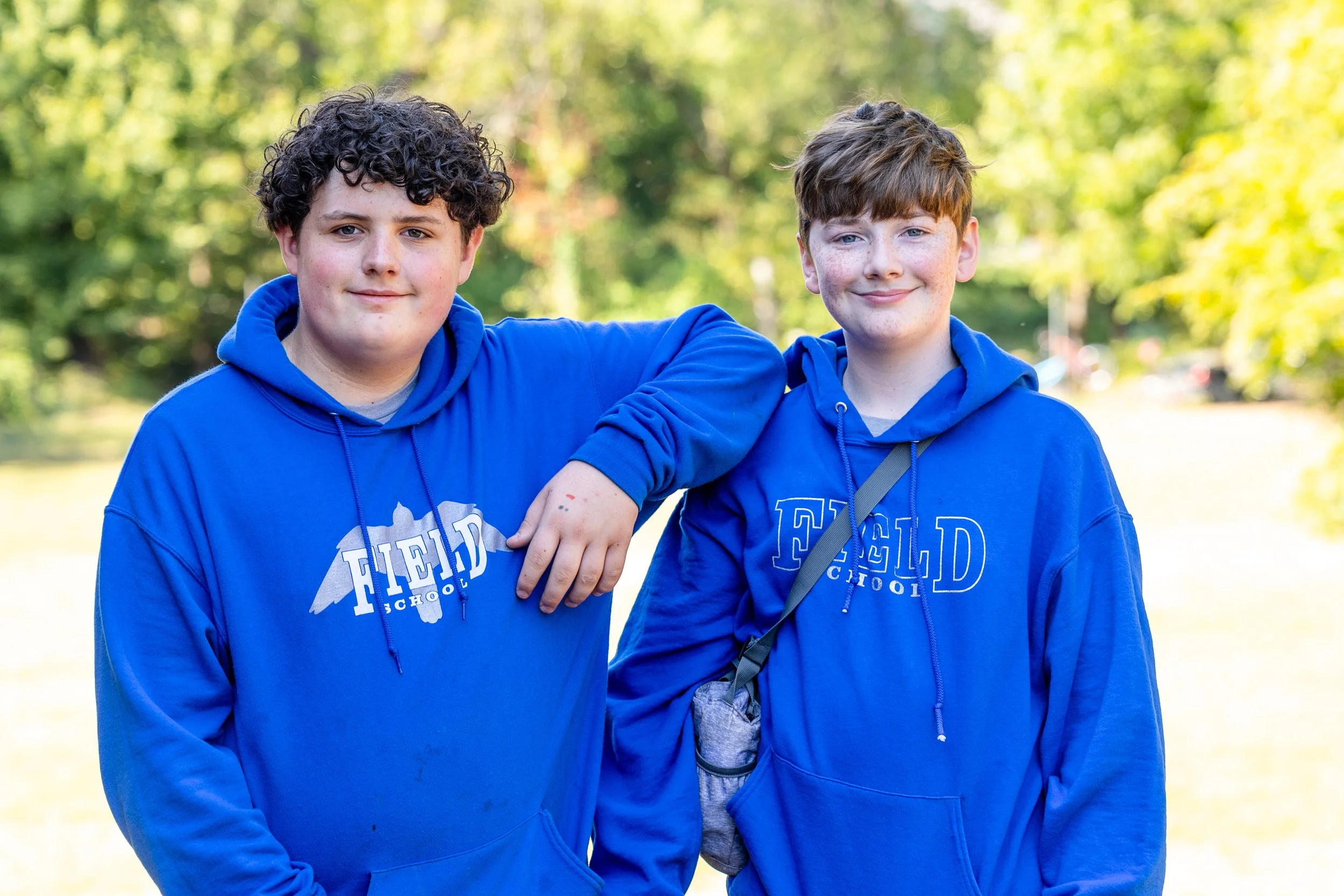
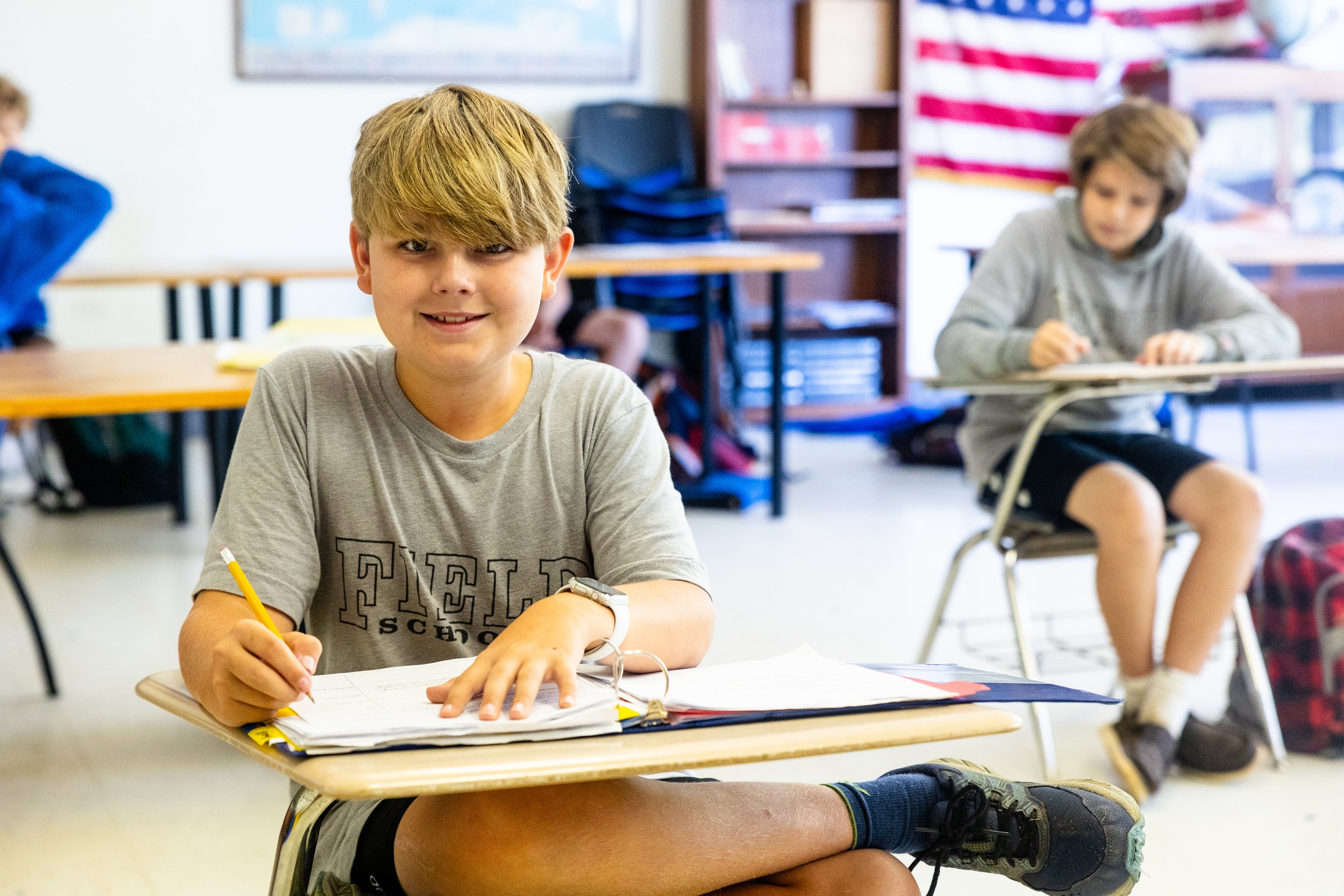
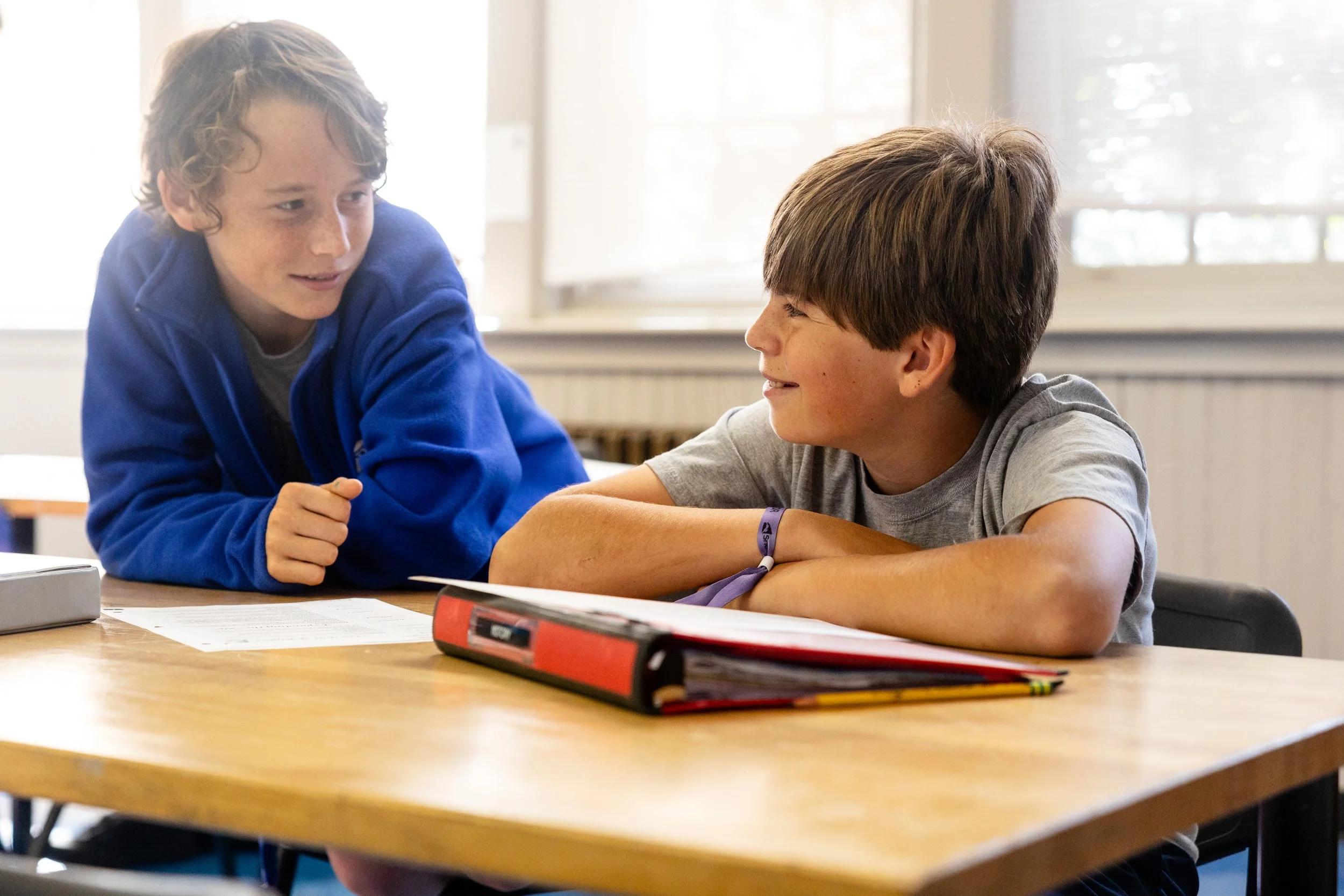
At Field School, we understand the unique needs of adolescent boys. We focus on the whole child to set them up for the greatest success for the rest of their lives. Our well-rounded program allows them to explore interests, engage in learning, and develop character and confidence.
We want your son to be excited about going to school. Let’s get started!
Welcome to Field School of Charlottesville
Why Field School?



Quick access to important parent resources.
Curriculum Overview

Core Programs
-
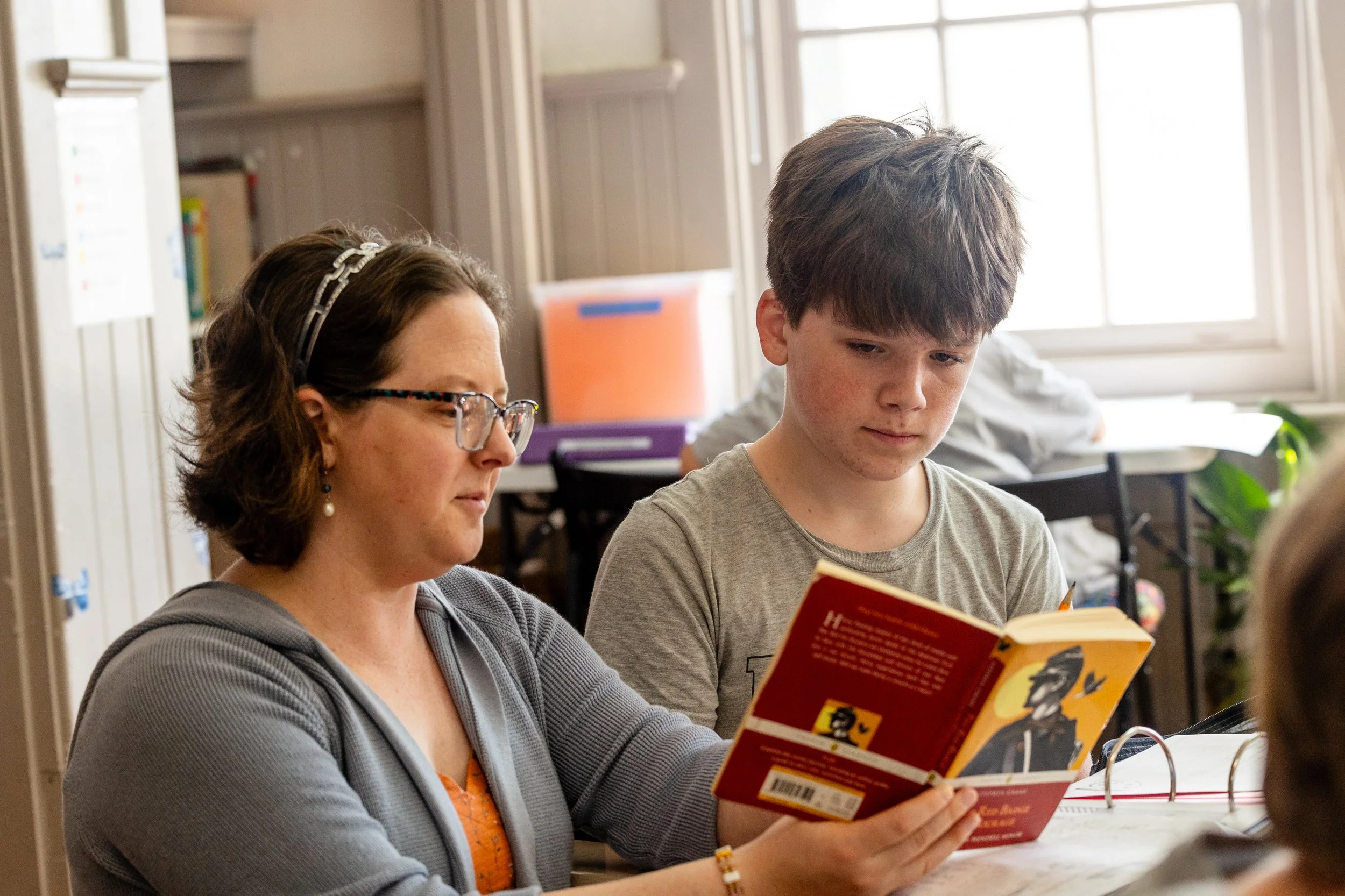
English courses meet four times a week. The goal is always to help students foster their literacy, communication skills, and command of the English language. English 7 includes seven thematic units that approximately match the seventh grade American History course in terms of era and emphasis. English 8 includes five thematic units and a trimester-long writing seminar. Our goals and objectives include:
• Carefully reading and critically thinking about a variety of literary genres
• Writing with a focus on form and structure to strengthen high-school readiness
• Developing and sharpening speaking, listening, reading, and writing skills
• Learning and implementing new skills in grammar, mechanics, and editing
English 5 | English 6 | English 7 | English 8
-
The goal of the mathematics program is to help boys develop basic mathematical skills and apply them with precision. The boys should develop discipline, patience and persistence in problem solving both in school and life. Using this symbolic language, students should be able to communicate the usefulness and power of mathematics.
Math 5 | Math 6 | Math 7 | Topics of Algebra | Honors Algebra I | Honors Geometry
-
Our daily science program has an integrated approach with attention to earth, natural and physical sciences, developing a growing understanding of the inter-related character of the sciences through these years. The grade-level courses require students to learn fundamental science information with increasing development of the comprehension of scientific processes and principles, including the scientific method. These courses include a hands-on lab component designed to inspire an intimate appreciation for scientific phenomena and the process of scientific inquiry. Though our general approach to teaching about technology is by integrating it into the curriculum, the final two years of science are dedicated to substantial integration of technology in homework, class projects, and presentations. We also design units to be taught in conjunction with history and English, whenever appropriate. Science topics include:
• Scientific method
• Lab reports
• Important scientists
• Physical science (density, light, convection, color, force and pressure, matter, energy and its forms, simple machines, robotics, atomic theory, periodic table, and design)
• Earth science (plate tectonics, prehistoric life, minerals and rocks, the atmosphere, climate and meteorology, Earth’s heat budget, ecology, and global warming)
• Life science (human systems, including sensory, muscular, skeletal, digestive, nervous, respiratory, and endocrine, cell and cell functions, scientific notation, photosynthesis, and basic chemistry)
Science 5 | Science 6 | Science 7 | Science 8
-
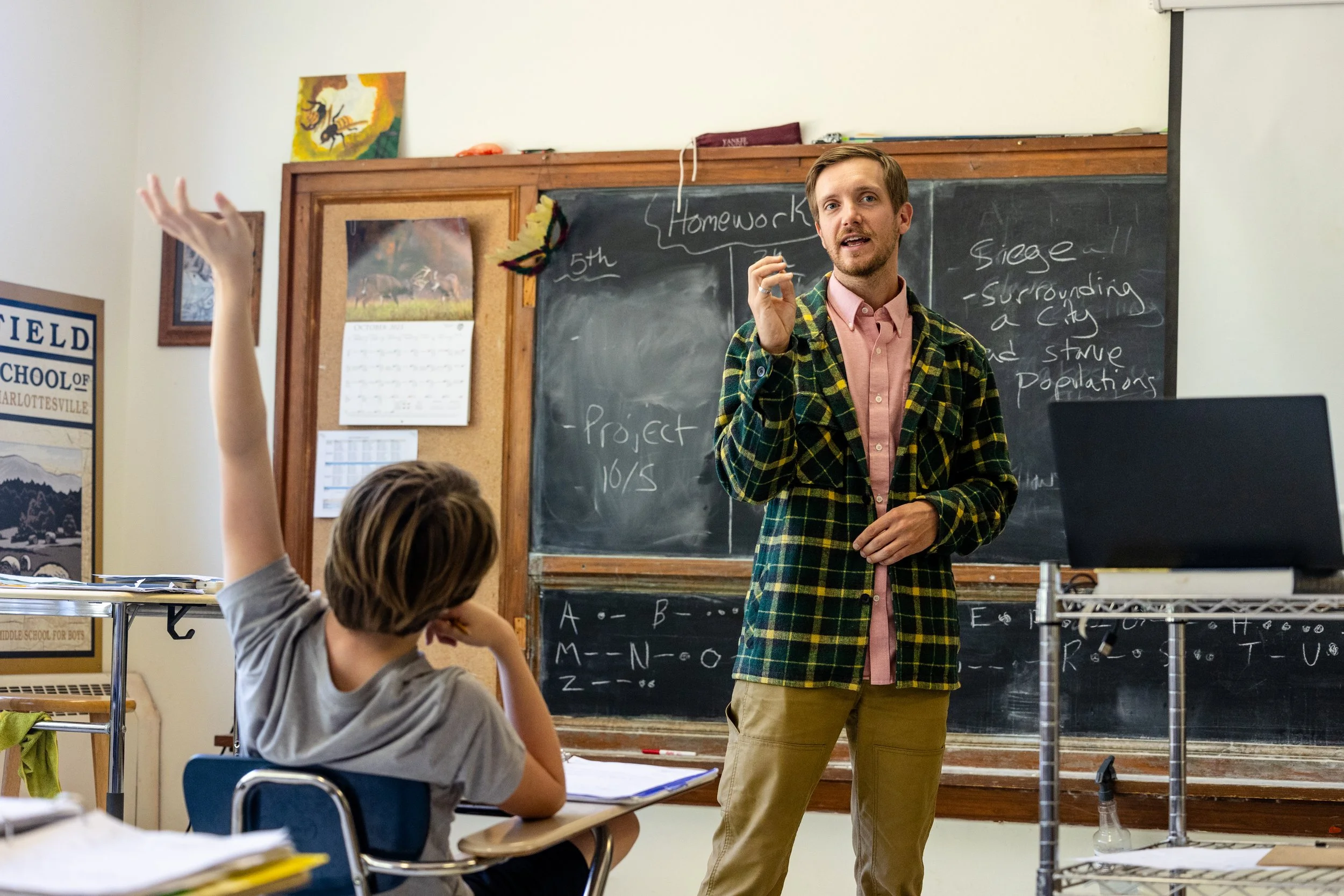
History courses include learning important periods, individuals, facts, and episodes, with an increasing level of comprehension and analysis of history and social sciences through the four years of middle school. The daily curriculum includes study in geography, politics, economics, regions, and culture and history, with particular attention to American History and the current and historical World Cultures of Asia, Africa, Europe, Latin America and the pre-encounter Americas, including our own area and region.
Evaluation of students in the courses includes traditional written tests, informal writing assignments, formal research-based writing assignments, discussions or debates, hands-on projects and classroom activities, creative projects, and the application of multi-input learning.
History 5 | History 6: World History I | History 7 | History 8: US Civics, Government, and Philosophy
-
Students begin their study of world languages with Latin in the 5th and 6th grades. The focus in these classes is on world language exposure, the fundamentals of language study (such as grammar and vocabulary), and cultural exploration. We aim for students to leave 5th and 6th grade Latin with a love of language learning, an understanding of Latin’s grammatical structure, and appreciation of the Roman culture.
After learning an introduction to world languages in 5th and 6th grade Latin courses, students further their language acquisition through the study of Spanish in the 7th and 8th grades. The focus shifts from exposure and appreciation to the practical application of a language widely spoken throughout the world.
Latin 5 | Latin 6 | Spanish 7 | Spanish 8
-
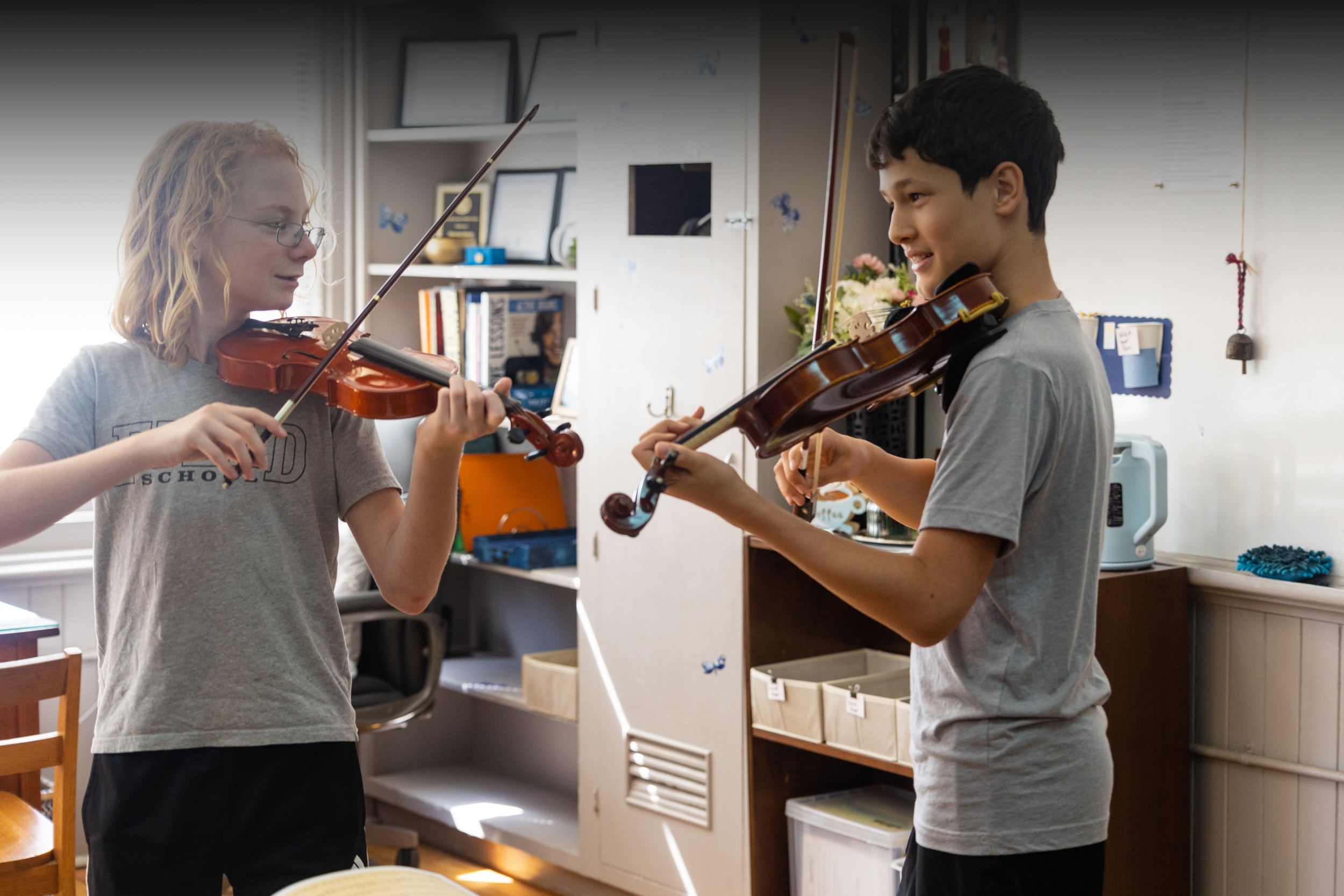
The arts program includes exposure to a wide variety of forms of artistic expression and hands-on or active practice, including fine art, crafts, music and drama. All of these classes are taught in seasonal blocks, varying in their length depending on the field. Topics include drawing, printing, printmaking, painting, sculpture, ceramics, art history, music theory, music listening, harmony, melody, rhythm, reading and writing music, and singing.
Art 5 | Art 6 | Art 7 | Art 8
-
Our health curriculum covers a wide range of age-appropriate topics that build upon one another in the advancing grade levels. Field School employs experts in the field of health each year to support the growth of our students. Every year of health builds upon the previous year: the material becomes more complex, and the courses include additional, age-relevant topics. The focus is to support healthy relationships and to make sound, informed decisions regarding their physical, emotional, and mental well-being. Health faculty encourage honest, open, and respectful conversation and questions.
Health 5 | Health 6 | Health 7 | Health 8